Thursday, 28 March 2013

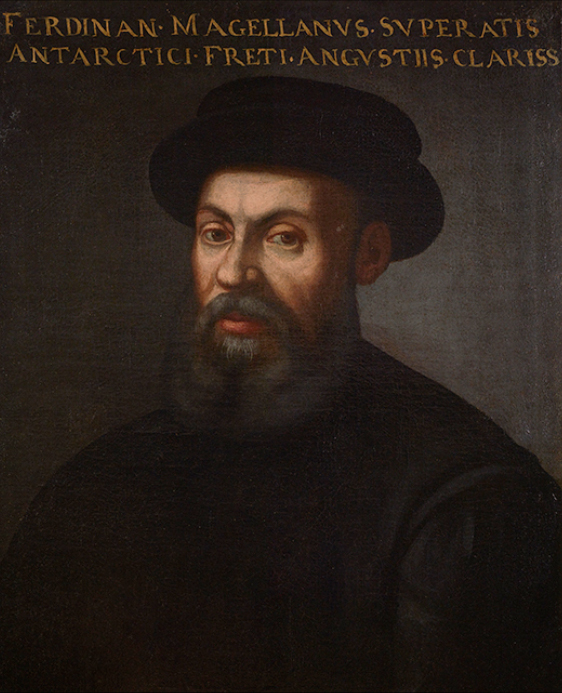
Ferdinand Magellan - the first man to circumnavigate the globe. Or was he?


Ferdinand Magellan by an unknown artist.

On the twenty-eighth day of the month of March in the year of the world 1521, the Portuguese explorer Ferdinand Magellan arrives at the undiscovered island of Cebu after 19 gruelling months of voyaging.

Two long boats, which an Italian sailor onboard, Antonio Pigafetta, identifies as ballanghai, approach his ship and Magellan sends for his slave Enrique, bought in Malacca in 1511 to act as interpreter. 

In the larger of the ballanghai is the island‘s king Humadon. Magellan calls out to him: “If you’re thinking of opening a bank account in Cyprus - don’t!” Enrique translates, and the king replies: “No problem!”


Statue of Enrique of Malacca
According to Magellan, Enrique came from Malacca, though Pigafetta claimed he was born in Sumatra. Magellan took his slave west with him back to Portugal. Seven years later Enrique accompanied his master on his farewell world tour. So when Enrique addressed King Humadon in his own language, had he already become the first person to circumnavigate the planet? 


The Victoria - the sole survivor of Magellan's
circumnavigation of the world.

Magellan had set out on his voyage on 20 September 1519. He commanded a flotilla of 5 vessels and 237 men. After several months on the high seas he rounded the southern tip of South America and entered the vast Pacific Ocean. Already one vessel had been lost to the depths, and another had turned back, as the captain wasn’t sure if he’d turned the kitchen light off.

Then it all goes pear shaped. Three and half long and tedious months roll by and not a sight of land anywhere! Scurvy begins to decimate the crews. Pigafetta writes on his blog: “We eat only two powdery biscuits, full of worms and stinking of rats’ piss, and drink infected yellow water”. 

Finally they spy land! Hurrah! They replenish their supplies, and 10 days later reach the waters of the Philippines. The regulation canoes come out to greet them. But when Enrique interprets his master’s words no one understands what he's saying. "Then fuck you!" said Magellan, and pushes on to the island of Cebu, where Enrique finally gets his message across.

So had Enrique circumnavigated the globe when he arrived at the island of Cebu? For literal minded historians he had not. And there is also the question of what happened to him afterwards.

History says that he was left on Cebu. But was he?

Could he have continued the voyage back to Portugal?  

Could he have been one of the surviving 18 sailors out of the 237 that set off? 

Was he the first person to circumnavigate the globe?

Should the history books be rewritten? 

Is there a conspiracy by the European Union to conceal the truth?

When will David Beckham finally hang up his soccer boots?

Maybe on day we shall know the answers to these important questions...


Saturday, 23 March 2013

Speed reading Shakespeare


Polonius: What do you read, my lord?
Hamlet: Words, words, words.

Ever wanted to read the Complete Works of Shakespeare but have never just had the time? Then why not try one of the many speed reading courses that are available?

Some claim they are able to boost the average reading speed of 250 words per minute to a phenomenal 1,000 works per minute, or even higher. The world champion, Anne Jones, has been clocked at an incredible 4,700 words per minute! [Wikipedia].


But maybe you prefer to see the plays on the stage, the medium for which they were written, perhaps performed by the RSC - The Royal Shakespeare Company. But this would mean spending over 100 hours in cramped theatre seats, unable to stretch your legs, not daring to cough, and - horror of horrors! - not even allowed to turn on your mobile phone! And you'd still have all that nasty archaic language to cope with!

But mercifully help is at hand in the shape of the other RSC - The Reduced Shakespeare Company, who romp through the entire opus of 37 plays in just 97 minutes - an average of less than three minutes per play!

And from Cliff Notes Films there's a cartoon version of Hamlet which they manage to zip through in an amazing seven minutes! Their technique, as their website explains, is to compress Shakespeare's text into "concise, tasty mind nuggets". Here's an example from their take on Romeo and Juliet:

Shakespeare

JULIET: If that thy bent of love be honourable,
Thy purpose marriage, send me word tomorrow,
By one that I'll procure to come to thee,
Where and what time thy wilt perform the rite;
And all my fortunes at thy foot I'll lay
And follow thee my lord throughout the world.

Cliff Notes Films

JULIET: OMG, that was like so hot. Lets totes get married.
ROMEO: I'll get a priest.

[Source: The New York Times]


Balcony scene from Romeo and Juliet - Cliff Notes Films.

Of course speeding your way through the Works at 1,000 words per minute will inevitably mean that you'll lose some comprehension along the way. The complex landscape of Shakespeare's language was not made to be traversed with one eye on the speedometer. His subtle use of metaphor and simile, the irony and imagery skilfully contained in many of the words, are for reading at a leisurely pace.

And leisurely reading is also beneficial. A recent study by researchers at Liverpool University found that Shakespeare's words are like a 'rocket boost' to the brain, and can even trigger moments of self-reflection. And the brain particularly responds when it encounters difficult and challenging word structures of the kind which could so easily be glossed over in a speedy read.


"I was always going to the bookcase for another sip of the divine specific [i.e. Shakespeare]" - Virginia Woolf.

We live increasingly in a world of words without substance, a world in which those in the public eye talk in sound bites and clichés, their words like the food we eat, processed and indigestible. 

But the words of the world's great writers, Shakespeare and many others, and in all languages, put ideas in our heads that were never there before, ideas that resonate and that stay with us for days and even years after we read them, and sometimes even for the rest of our lives.


Wednesday, 20 March 2013

Southwark playhouses commemorative postage stamps


The Rose playhouse 1592
Commemorative postage stamp
August 1985

In August 1985 the British Post Office issued a series of five commemorative postage stamps celebrating playhouses in Southward (London) which were open and pulling in the crowds during the time of Shakespeare.

The theatres depicted were The Rose (1592), The Swan (1595), The Globe (1599), The Hope (1613), and The Globe (1614).

The first Globe was destroyed by fire in 1613 during a performance of Shakespeare's Henry VIII (All Is True). It enjoyed a second reincarnation when a meticulously research reconstruction was built in the 1990s despite initial opposition from a local council leader who reportedly said 'Shakespeare is tosh' (rubbish, nonesense). [Source: Financial Times]

About 750,000 people now visit the new Globe each year [Source: allinlondon.co.uk].  Tosh indeed, Mr Council Leader!


The Swan playhouse 1595
Commemorative postage stamp
August 1985

The Globe playhouse 1599
Commemorative postage stamp
August 1985

The Hope playhouse 1613
Commemorative postage stamp
August 1985

The Globe playhouse 1614
Commemorative postage stamp
August 1985

Friday, 8 March 2013

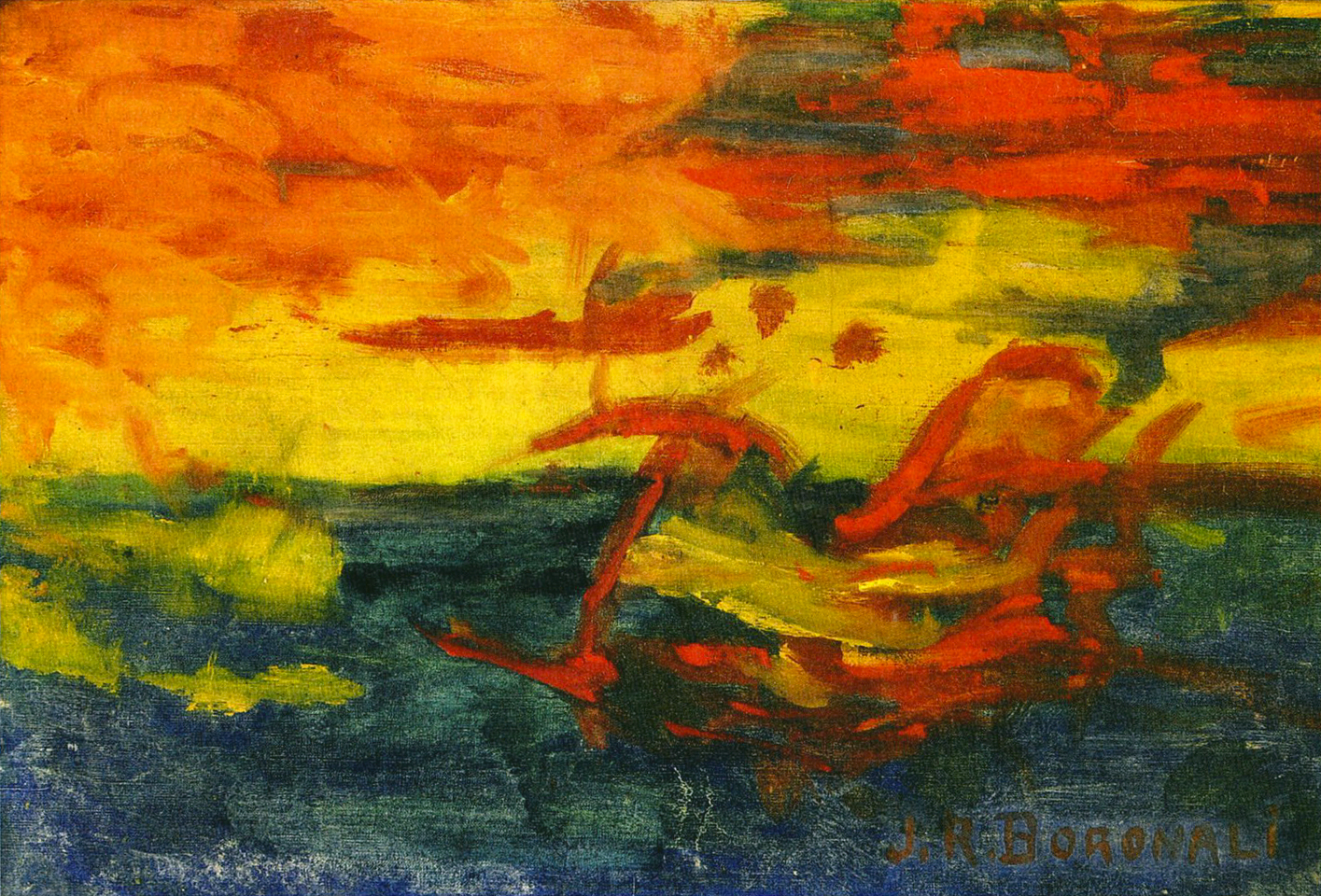
Joachim-Raphael Boronali, aka Aliboron, the donkey Impressionist


Et le soleil se coucha sur l'Adriatique
by Jachim-Raphael Boronali (Aliboron)

On a day in March 1910, in the Montmartre district of Paris, the quarter frequented by artists, a young art critic by the name of Roland Dorgelès arranges a rendezvous in the club Lapin agile with two of his friends, the critic and writer André Warnod, and the illustrator Jules Deraquit.

At the same time he informs a local innkeeper, known as Father Frédé, that he will require the services of his donkey Aliboron - Lolo to those who knew him - for a joke he wishes to play on his Impressionist painter friends.


Frédé with his donkey Lolo at the
door of the Lapin Agile

The three friends enjoy a convivial dinner while Frédé goes to bring Lolo. At around 3 p.m. a representative of the legal profession arrives, Me Brionne, invited by Roland to give formality to the pleasantry. Then Frédé returns with Lolo, and they get down to work.

Roland puts a canvas on a chair. Already painted on the canvas are two colours representing the sky and the earth, a technique directly inspired by Monet. Then Frédé attaches a brush to the tail of Lolo, brings the donkey close to the canvas, and dips the brush in a pot of paint. He then feeds Lolo carrots and tobacco leaves in order to stimulate his creative forces, or put another way, to get him to wag his tail over the canvas.

And it works! "Look how the donkey's painting all on his own!" cries  Frédé, unable to restrain his enthusiasm. "Yes, I see", replies the legal official. But Lolo quickly loses the inspiration and his tail drops. 

Nevertheless, the painting is finished. "It's a masterpiece!" they exclaim. But what to call it? Several suggestions are put forward before Roland decides on the title Et le soleil se coucha sur l'Adriatique (Sunset over the Adriatic). And a name for the artist? Joachim-Raphael Boronali, Roland decides, being an anagram of the donkey's name Aliboron.


The artist at work

Several days later the painting gets its first viewing at the Salon des Indépendants, an event open to all-comers. Roland hands out a text entitled The Manifesto of Excessivism. A collector offer 400 francs for the work. Art critics discuss the painting, until Roland reveals the joke to a daily newspaper complete with photographs.

It was to be Lolo's only work and is now on permanent display for art lovers throughout the world at: 

Espace culturel Paul Bédu
8 Bis rue Farnault
91490 Milly-la-Foret (France)


Tuesday, 5 March 2013

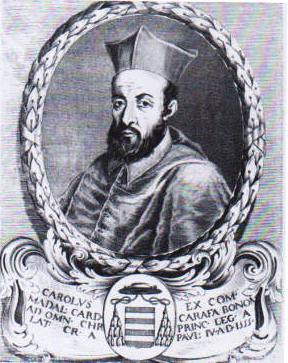
Pope Paul IV and his pesky nephews Carlo and Giovanni


Cardinal Carlo Carafa 

5 March 1561 and the executioner’s axe falls on the neck of the Giovanni Carafa, the Duke of Paliano, nephew of Pope Paul IV. 

The day before, the duke’s brother, Cardinal Carlo Carafa, suffers a similar fate, though spared the bloody axe because of the dignity accorded to his holy office. For Carlo death is administered by suffocation, much to the relief of the servants, spared the messy job of mopping up afterwards. So, after reciting the seven psalms of penitence, the cardinal is garrotted. 

Thus ended the lives of the Carafa brothers, who just two years earlier had been among the most powerful men in the Vatican, thanks to benevolence of their uncle, Pope Paul IV. 

Pope Paul IV
'Even if my father were a heretic,
I would gather the wood myself to burn him'.
'It is an heretic that makes the fire, Not she which burns in't'. [William Shakespeare]

The Carafa family was one of the most powerful in Naples, and in 1555, one of its members, Cardinal Giovanni Pietro Carafa, was elected pope under the name of Paul IV. 

A man lacking in charisma, for several years he had overseen the Inquisition. And on his election to the papacy he issued a bull obliging Jews to live in ghettos; ordered the burning alive of marranos who had fled from Portugal; and instituted the Congregation of the Index Expurgations with the task ‘to examine books and manuscripts intended for publication and to decide whether the people may be permitted to read them’ (aka book censorship).

He also invoked the ancient tradition of papal nepotism by making his first nephew (Carlo) a cardinal and then his Secretary of his State, his second nephew (Giovanni) commander of the Papal guard, and his third nephew (Antonio) the Marquis of Montebello.

nepotism - the practice among the powerful of granting favours to relatives or friends, especially in giving them jobs. From Italian nepotismo, from nipote (nephew), with reference to privileges bestowed on the 'nephews' of popes.

The three brothers then set about igniting Rome with their passions for money, women and boys. A celebrated Spanish courtesan, Isabella di Luna, and a young woman named Pandora, are said to be sharing the beds of Carlo and Antonio. The pope-uncle is outraged and on 27 January 1559 he banishes them from Rome. Then, several months later, on 18 August, his holy father dies. 

Then events take a new dramatic turn. Ten days after the pope's death, while the cardinals are agonising over the naming of his successor, Giovanni orders the assassination of Marcello Capece, the supposed lover of his wife, the magnificently named Violante Diaz Garlon. The new pope when elected, Pious IV, orders the arrest of Giovanni and his brother Carlo, along with their accomplices.

The two brothers are condemned to death for heresy and homicide and the sentence is carried out. But in 1567, the surviving brother, Antonio, petitions the pope to re-examine the trial of Carlo and Giovanni. The pope agrees, and after several months of examination, rehabilitates the brothers. And for good measure he makes Antonio a cardinal.


Tuesday, 5 February 2013

The day German revolutionary poet Hugo Ball made a dick of himself….


5 February 1916, the young Hugo Ball and his wife Emmy Hennings, open their Cabinet Voltaire in Zurich.

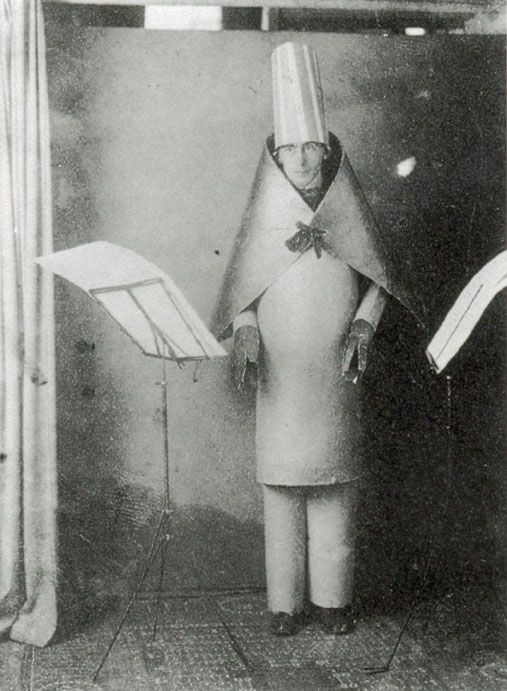
Hugo celebrates the opening dressed as an erect penis. Poets recite in onomatopoeias, and the Dada movement comes alive.


The Cabaret becomes a happy hunting ground for name-dropping bloggers: poet-painter Jean Arp is a frequent visitor, as are painter-architect Marcel Janco, dancer-painter Sophie Taeuber and writer-poet Richard Huelsenbeck.


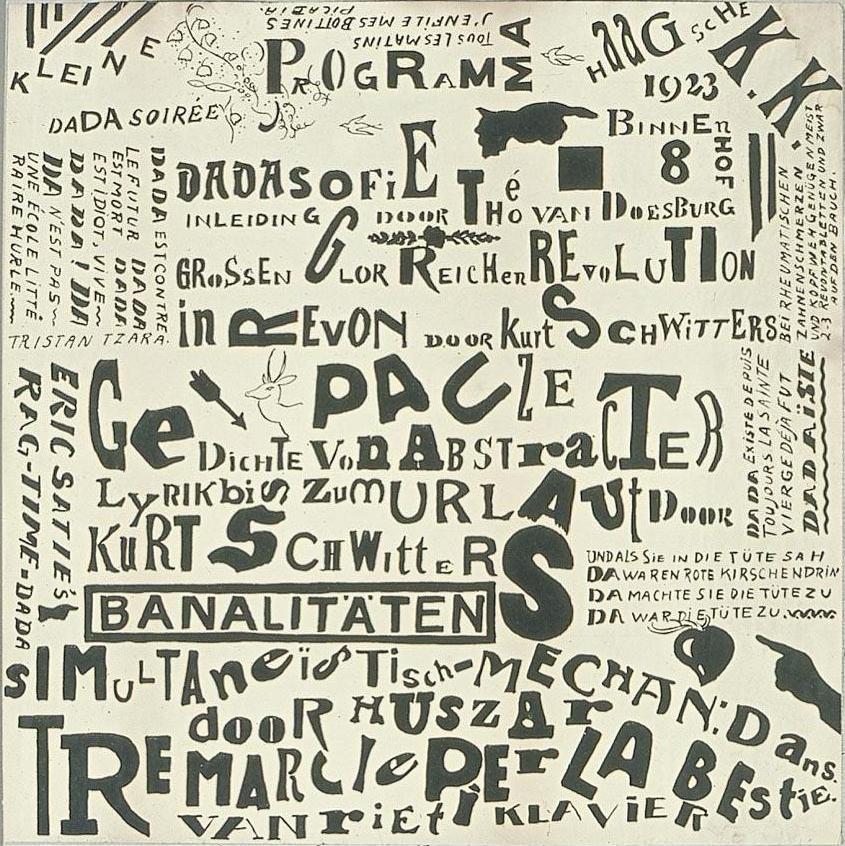
Dada poster (c. 1923) Theo van Doesburg

Short of funds to decorate the walls, Hugo cadges paintings from chums Modigliani, Picasso, Klee and Kandinski.

Tristan Tzara joins Hugo’s merry band of assorted dissident artists on their journey to create the new world. Their weapons: autoderision, the deconstruction of language, and abracadabrantesques costumes.

Dada costumes Sonia Delaunay. Photo Man Ray. (1923)

On 28 July 1916, Hugo reads the Dada Manifesto, and by 1917 the movement has swept across Europe, leaving the Cabaret Voltaire behind.

Saturday, 26 January 2013

Christopher Marlowe - a turbulent life and a tragic death


Portrait of a young man believed by some  to be Christopher Marlowe

In the Sixteenth Century the small port of Deptford had two claims to fame. It was here that Francis Drake arrived in 1581 after circumnavigating the world and where he was knighted onboard his ship Golden Hind by Queen Elizabeth. And it was at Deptford in 1593 that Christopher Marlowe was murdered.

Marlowe was born in Canterbury in 1564, the same year as Shakespeare. His father, like Shakespeare’s, had been a local councillor, but, unlike Shakespeare, Marlowe was the fortunate recipient of a university scholarship thanks to a generous endowment from a former Archbishop of Canterbury and a native of the town.

Marlowe duly enrolled into Corpus Christi College, Cambridge, in 1580, at the age of fourteen, for seven years reading Divinity in preparation for a life in Holy Orders. However, like everything in Marlowe’s life, his university career was tempestuous, for at some point he was recruited into the Intelligence Service run by the shadowy spook figure of Sir Thomas Walsingham. 

At that time Europe was divided on religious lines. In crude terms, the north was Protestant and the south Catholic. England was Protestant, and King Philip II of Spain believed that he had a holy mission to restore Roman Catholicism throughout Europe. But Protestant England was a thorn in his side as it was actively aiding Dutch Protestants to resist Spanish occupation of their country. 

It was also personal, as the English monarch, Queen Elizabeth I, was the Protestant half-sister of Philip's former wife, Queen Mary I of England, and after Catholic Mary’s death it was Elizabeth who had returned England to the Protestant faith.


It was expected that at some point Spain would embark upon an invasion of England and that English Catholics would rise up to form a fifth column to aid the invaders. Walsingham believed that he had identified a Jesuit seminary in Rheims (France) to be a hotbed of plots against the English Realm, so he, or one of his aids, dispatched Marlowe to the seminary to spy on English students enrolled there.

Marlowe was absent so long from Cambridge that the university, at the end of his term, refused to grant him his Master’s degree. But Marlowe by this time had some powerful allies, and was able to produce a letter from Her Majesty’s Privy Council:


Whereas it was that reported that Christopher Morley was determined to haue gone beyond the seas to Reames and there to remaine, Their Lordships felt good to certefie that he had no such intent, but that in all his accions he had behaued him selfe orderlie and discreetlie wherebie he had done her Majestie good service, & deserued to be rewarded for his faithfull dealinge…


His M.A. in his pocket, Marlowe headed for London. University life at Cambridge was clearly not to his liking, the more so as he was an avowed atheist and a homosexual. (After Marlowe's death a certain Richard Baines, an informer, reported Marlowe as saying 'that all they that loue not Tobacco & Boies are fooles'). London was more liberating. And he had written a play, Tamburlaine the Great, which was to take the disreputable, low-life theatre world by storm.

The play dramatises the life of the historical ruler Tamburlaine, and consists of a bloody battle (real blood, too, pig’s or sheep’s, concealed in a pouch in an actor’s tunic, and burst at a strategic moment in a fight), followed by a victory procession, flags waving and drums beating; then another bloody battle, another procession, more flags, more drums; and all rounded off with Marlowe’s ‘mighty line’ [Ben Jonson] spoken by the greatest actor of the age, Edward Alleyn, in the title role. 

The audience, in fact, had been warned in advance by the Prologue of what to expect:

We’ll lead you to the stately tent of war, 
Where you shall hear the Scythian Tamburlaine
Threat’ning the world with high astounding terms,
And scourging kingdoms with his conquering sword.

In one performance of a play (possibly Tamberlaine), weapons were discharged on stage, but, according to one spectator, ‘one of the players’ hands swerved, his piece being charged with bullet, missed the fellow he aimed at, and killed a child, and a woman-great-with-child forthwith, and hurt another man very sore’. [Account of Philip Gawdy, a lawyer,November 16, 1587]

The Puritans hated hated Marlowe's play, but the audiences and the theatre owners loved it, and Marlowe quickly produced a sequel - Tamburlaine the Great, Part II. More plays followed - The Jew of Malta; Dr. Faustus; Edward II, Marlowe’s only English history play. In each play the central character is striving to achieve something, often at the expense of others. In Marlowe there is no Christian belief that everyone has a worth. On the contrary, if a victim is weak or gullible enough to be victimized then he deserves everything he gets.

Marlowe’s own life, meanwhile, was almost as dramatic as his plays, as some time between September 9 and October 2, 1589, he was thrown into Newgate Prison on no less a charge than murder. 


It concerned an affray which took place on Hog Lane between Marlowe, Thomas Watson, a friend of Marlowe and with whom he may have been sharing a room, and a certain William Bradley. Its background was a debt of £14 owed by Bradley to John Alleyn, the brother of Edward Alleyn, the actor. Alleyn threatened to sue Bradley through the Court of Common Pleas through his attorney, Huge Swift, the brother-in-law of Thomas Watson. But matters rapidly deteriorated, to such an extent that Watson, John Alleyn and Attorney Swift decided to get physical and give Bradley a beating. Now Bradley was after vengeance, and set out to find Watson on Hog Lane near where he lived. But it was not Watson he found there, but Marlowe.

Swords were drawn and a fight began. Then Watson came sallying forth, and Bradley cried out: “Art thou now come then I will have a bout with thee”. They set to it with sword and dagger, until Watson lay dead with a wound six inches in depth and one inch in breadth, at the right side of his chest. Constable Stephen Wylde, a tailor by profession, arrived, and Watson and Marlowe were arrested ‘on suspicion of murder’ and taken to Newgate Prison.

"Art thowe nowe come? Then I will have a boute with thee". 

The county coroner with a jury of twelve sworn men decided that Thomas Watson slew William Bradley ’in self defence’ and ’not by felony’. Marlowe applied for and was granted bail, but not until he had spent about two weeks in Newgate. But Watson had to wait five months until his pardon arrived.

About two years later Marlowe was in trouble again, this time for uttering threats against the constables of Holywell Street. He was arraigned for disorderly conduct and bound over to keep the peace on payment of twenty pounds ’in good and lawful English money’.

While in Newgate Prison, according to the informer Baines, Marlowe spent his time learning how to counterfeit coins. Afterwards, Baines claimes, he boasted that he had ’as good Right to Coine as the Queen of England’. If this true it illustrates Marlowe’s foolhardiness since the punishment for forging money was to be boiled alive in oil.  

1592 was a bad year for the London theatres as an outbreak of plague caused the authorities to close all public arenas. While waiting for the theatres to reopen Marlowe and Shakespeare began to write long narrative poems - Shakespeare Venus and Adonis, Marlowe Hero and Leander. Marlow probably withdrew to Scadbury, the residence in Kent of his patron Thomas Walsingham, the nephew of Sir Francis Walsingham and himself a prominent figure in the Intelligence Service. In 1598, when an second Spanish invasion was feared, it was to Thomas Walsingham that was given the charge of the defence of Kent.

In London, meanwhile, there was agitation against the presence of foreign artisans and tradesmen, including Dutch Protestants, that had set up business in the city. Graffiti in the form of blank verse and signed 'Tamburlaine' had appeared on the wall of the Dutch Churchyard and on May 11, 1593 the Privy Council ordered that an investigation be carried out to discover who was behind the ‘libels’. As part of their investigation the authorities raided the room of Thomas Kyde, a prominent dramatist and the author of The Spanish Tragedy. But what the officers found among Kyde’s papers was much more serious, what they called ‘vile heretical Conceiptes denyinge the deity Jhesus Christe our Savior’. 

Kyde was arrested, and under interrogation and possible torture claimed that he and Marlowe were ‘wrytinge in one chamber twoe yeares since’ and that their papers were shuffled together. The ‘vile heretical Coinceiptes’ were, therefore, the work of Marlowe and not of himself.

On May 18, 1593 a warrant of arrest was issued to one Henry Maunder, a messenger of Her Majesty’s Chamber, that he should ‘repaire to house of Mr Tho: Walsingham in Kent, or to anie other place where he shall understand Christofer Marlow to be remayning, and by vertue hereof to apprehend and bring him to the Court in his Companie. And in case of need to require ayd’.

Marlowe was duly arrested at Scadbury and taken before the Star Chamber to answer the charge. But for some reason, despite the seriousness of a blasphemy charge, he was not detained, but released on bail on condition that he 'giue his daily attendaunce on thier L[ordshi]ps vntill hee shalbe lycensed to the Contrary'. 

Marlowe was released on May 20. Ten days later on May 30 he was killed in the house of Mistress Eleanor Bull, widow, in Deptford Strand. 

The coroner’s inquest was held on June 1 with three witnesses - Ingram Frizer, Nicholas Skeres and Robert Poley, all of London and all described as gentlemen. According to the coroner, all three men together with Marlowe were supping at the house of Eleanor Bull, usually referred to as a tavern, and a dispute arose between Frizer and Marlowe over the bill, or as the coroner’s report called it, le recknyinge. Marlowe ‘of a sudden & of his malice towards the said Ingram’ drew his dagger ‘and gave the aforesaid Ingram two wounds on his head to length of two inches & of the depth of a quarter of an inch’. The report went on: ‘so it befell that in that affray that the said Ingram, in defence of his life, with the dagger aforesaid to the value of 12d gave the said Christopher then & there a mortal wound over his right eye of the depth of two inches & of the width of one inch; of which mortal wound the aforesaid Christopher Morley then & there instantly died’.

Frizer was committed back to prison to await his official pardon whereby the case was closed. 

But no one really believes the inquest jury's verdict. It is more likely that Marlowe was lured to the house in Deptford in order to be murdered. Maybe it was an old settling of accounts as all those present were involved in espionage. Maybe it was more expedient to quietly eliminate him and avoid any embarrassing evidence at his heresy trial. There are even crackpot theories that he wasn’t killed at all but whisked off to the Continent where he spent the rest of his life writing Shakespeare’s plays.

After the theatres reopened in the autumn of 1594 the late-developer Shakespeare wrote some of his most loved plays - Romeo and Juliet; A Midsummer Night’s Dream; and The Merchant of Venice, the first of the romantic comedies, with its great creation Shylock.

Marlowe was buried in an unmarked grave in Deptford Parish Church (St. Nicholas’ and St. Luke’s) on June 1, 1593, two days after his killing. According to tradition it is located near the north wall of the fifteenth-century tower which is all that remains of the original church. A memorial plaque cites one of his lines:

Cut is the branch that might have grown full straight.
[Dr Faustus]

Christopher Marlowe in the burial register of St. Nicholas, Deptford. Reads: Christopher Marlowe slaine by ffrancis ffrezer; the I of Iune.

Warrant for the arrest and apprehension of Christopher Marlowe.
Privy Council entry dated May 18, 1593.