Tuesday, 18 June 2013

Atahualpa - the unhappy Inca Emperor


'The time is right to strike the Inca Empire'.
[Francisco Pirazzo in a letter to the King of Spain]

The Incas of Peru worshipped their Sun God Inti.

They built lavish temples to Inti, which they garnished with gold, believing gold to be Inti's tears - 'the tears of the Sun'.


But it was also gold that the Spanish conquerors wanted. 

For them gold was not the Sun God's presence on Earth, but a commodity they could use to finance their wars and conquests.

So the invaders' leader Francisco Pizarro kidnapped the Inca Emperor Atahaulpa and would only free him in exchange for a ro0m full of GOLD.


The Inca people loved their king and they quickly amassed a mighty hoard of gold and silver. 

But Pizarro had never any intention of sparing Atahaulpa, and once he had his gold he sentenced him to death by burning him alive.


Atahaulpa pleaded with his captor, telling him that if he were burnt his soul would be unable to join his ancestors in the afterlife.

His Spanish gaoler listened to his plea and agreed to his request. But on condition that he convert to Christian Catholicism. 
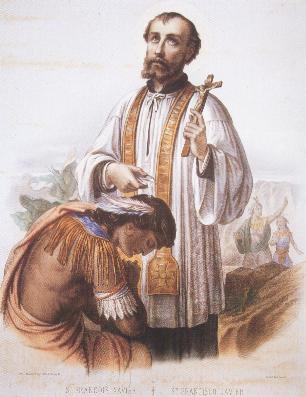


For centuries Catholicism had been the oppressor of Europe, punishing free thought with excommunication and worse, and censoring all forms of scientific progress.


Its founder, on the other hand, Jesus Christ, like Ghandi after him, had been a pacifist, a man of peace, who told his followers that they should not hate their enemies, they should love them.


'I like your Christ. I do not like your Christians. Your Christians are so unlike your Christ.'  Mahatma Ghandi.

But the moment Christianity was adopted as the official religion of the all-conquering Roman Empire, it ceased being a peaceful pacifist movement, and became instead one of oppression. 

And in the fifteenth century this meant one thing: the feared, dreaded and unholy INQUISITION


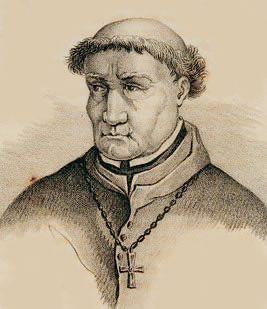
Torquemada, Grand Inquisitor of the Spanish Inquisition.


Llorente, the historian of the Inquisition, computed that Torquemada and his collaborators, 'in the course of eighteen years, burnt at the stake ten thousand two hundred and twenty persons .... and otherwise punished ninety-seven thousand three hundred and twenty-one'. 
[History of the Conflict Between Religion and Science by John William Draper.]


But if Atahaulpa wished to save his soul then he would have to accept the demands of his captors. 

So Atahaulpa became a Catholic Christian. 

And true to his word, Pizarro did not have him burnt. 

He had him garrotted instead. 


And then he took his gold. 

The tears of his god.


Friday, 14 June 2013

Alexander the Great and the Greek waiter


'I foresee a great funeral contest over me'. Alexander the Great

On 13 June 323 BC, in a room surrounded by his doctors, Alexander the Great died of a fever.


Some said he had been poisoned by the Macedonian general Antipater. Others that the death of their commander was due to excessive drinking. 

But it is more likely that the conqueror of Egypt, Persia, and Asia Minor as far as the banks of the Hyphasis in India, where he wept that there were no more kingdoms for him to conquer, was carried away by the humble mosquito, a victim of West Nile fever or of malaria.


Alexander's body was barely cold when it was embalmed and placed in a human shaped sarcophagus filled with honey. 

But what to do with it then?

Alexander's wish was that they toss the body in the river! 

But his wife, Roxanne, and one of his generals, Perdiccas, decided to evoke the wishes of his mother, Olympias, and transport the remains for burial in the family crypt at Aegae in Macedonia.


A sumptuous funeral carriage was constructed, fashioned out of beaten gold, the top adorned with mother-of-pearl and precious stones. It took one year to complete and needed sixty-four mules to pull it.

But while on route to Aegae it was hijacked by Ptolemy, one of Alexander's generals! 

Ptolemy took it to Egypt and Alexander's body was buried in Memphis.


Alexander's mortal remains remained in Memphis until the late fourth or early third century BC, and then were taken to a new burial place in Alexander, the city bearing the conqueror's name.

But they did stay in this place. At some time during the reign of Ptolemy Philopator, from 222/21 to 205 BC, they were taken to a communal mausoleum, also in Alexandria, and placed with the bodies of Ptolemy Philopator's dynastic predecessors. 


And there they stayed. The future Roman Emperor Augustus is said to have visited the tomb around 30 BC and placed a golden diadem on Alexander's mummified head. And the last recorded visit to the tomb was by the Roman Emperor Caracalla in AD 215. 

By the fourth century AD all trace of the location had been lost to posterity.


But modern-day Indiana Joneses have not given up the search. For generations streams of distinguished archaeologists from renowned institutions have made their way to Alexandria in the hopes of being the first to claim one of the antiquity's greatest prizes. 

And among them, lost in the throng, was a lowly Greek waiter, Stelio Koumoustos, from Christiana Konstantinou's cafe-bar in downtown Alexandria.


When not serving black tea and Turkish coffee to Mlle Christiana's customers, Stelio was out digging holes wherever he could.

Then, in 1960, convinced that the tomb lay buried beneath Alexandria's Saad Zaghuil Square, he persuaded the United Arab Republic's Department of Antiquities to excavate the site.


Using his salary and his waiter's tips Stelio raised the sum of 500 Egyptian pounds to finance the dig.

The newspapers got interested, among them the The Times of London. 

On Monday 4 April 1960 The Times reported that the excavation had officially begun. Traffic was stopped and large crowds gathered.


The work continued apace, and then, on Tuesday 26 April, the diggers make a discovery! 

But alas it was not Alexander's tomb they had found. Only water. Lots of water.

Then the work stopped, The Times lost interest, and Stelio returned to clearing tables in Mlle Christiana's cafe.


Stelio kept searching for a couple more decades but never found the elusive tomb of Alexander. 

He finally returned to Greece where he tried to share his carefully amassed data in exchange for a pension in dollars and a Mercedes-Benz. 

As a graduate student commented, it would have been a small price to pay for the location of the tomb of a legend that was truly worthy of the name.


Illustrations:
The Alexander Mosaic c. 100 BC.
Death of Alexander the Great by (after) Jean II Restout.
Detail of the Alexander Sarcophagus depicting Alexander at the Battle of Issus. [Wikipedia Commons].
Alexander's Funeral Carriage - mid nineteenth century.
Ptolemy by unknown artist 3rd century BC.
Augustus Before the Tomb of Alexander by Sebastien Bourdon.
Reconstruction of Alexander's tomb - source: sbhistorygeek.wordpress.com.
Christiana Konstantinou in Alexandria.
Mercedes-Benz 170S [Wikepedia Commons]


Wednesday, 12 June 2013

Cats in Art : some famous artists' paintings of cats


Sleeping Girl (Girl with a Cat) by Pierre-Auguste Renoir

'Did you know that many of the world's greatest artists have painted cats?' said the gentleman.
'Yars', said the lady.
'Maybe it's the feline form and the kittenish nature - if you'll pardon the pun - which attracts them', said the gentleman.
'Yars', said the lady.
'Pierre-Auguste Renoir, for instance, with his Sleeping Girl (Girl with a Cat) from 1880. A charming picture, don't you find?' said the gentleman.
'Yars', said the lady.

Woman with a Cat by Pierre-Auguste Renoir

'Renoir also gave us his Woman with a Cat from around 1875', said the gentleman.
'Yars', said the lady.
'A delightful painting, yes?' said the gentleman.
'Yars', said the lady.
'And we musn't forget his Young Boy with a Cat from 1869', said the gentleman.
'Yars, said the lady.

Woman with a Cat by Edouard Manet

'Edouard Manet, too, produced a work around 1880 which he also called Woman with a Cat', said the gentleman.
'Yars', said the lady.
'Quite different to Renoir's, eh?' said the gentleman.
'Yars', said the lady.
'And of course it would be amiss of us not to mention Paul Gauguin's Mimi and her Cat from 1880. That would be amiss of us, wouldn't it?' said the gentleman.
'Yars', said the lady.

Mimi and her Cat by Paul Gauguin

'Of course it isn't only artists who are attracted to cats', said the gentleman.
'Yars', said the lady.
'Did you know that there are more cats in North America than there are dogs? That over 30% of all North American households own one? Did you know that?' said the gentleman.
'Yars', said the lady.
'Ah, but it was very different during the Spanish Inquisition when the poor creatures were condemned as evil by Pope Innocent VIII and thousands were burned', said the gentleman.
'Yars', said the lady.
'And did you know that the cat flap was invented by no less illustrious a gentleman that Sir Isaac Newton?' said the gentleman.
'Yars', said the lady.
'And that the world's first cat show took place in London in 1871?' said the gentleman.
'Yars', said the lady.

Wounded Bird with Cat by Pablo Picasso

'But to get back to great artists and their paintings of cats, did you ever see Pablo Picasso's work Wounded Bird with Cat from 1939? said the gentleman.
'Yars', said the lady.
'Not the kind of picture you'd like to have hanging in your living room, eh?' said the gentleman.
'Yars', said the lady.
'Er, forgive me for asking, madam, but do ever say anything besides 'Yars'?' said the gentleman.
'Yars', said the lady.
'Excellent!' said the gentleman.
'Yars', said the lady.

Two Cats, Blue by Yellow by Franz Marc

'Naturally the great German artist Franz Marc also gave us some wonderful cats paintings, such as his Animal Cats, and his Two Cats, Blue and Yellow from 1912', said the gentleman.
'Yars', said the lady.
'And should we forget Woman Cat by Fernand Leger? I don't think we should, should we?' said the gentleman.
'Yars', said the lady.
'Or Lunch of the Little Ones by Pierre Bonnard?' said the gentleman.
'Yars', said the lady
'Or Black Cat by Nina Iticovici?' said the gentleman.
'Yars', said the lady.
'And last but not least the millions of painting enthusiasts around the world who must have committed their own dear tabbies to canvas. We musn't forget them either, should we?' said the gentleman.
'Yars', said the lady.

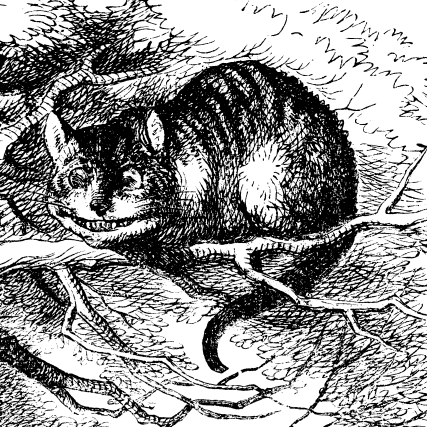
Cheshire Cat from Alice's Adventures in Wonderland

'Well it's been very interesting talking to you', said the gentleman.
'Yars', said the lady.
'We must have a chat again some time', said the gentleman.
'Yars', said the lady.
'Is there any last thing that you'd like to say?' said the gentleman.
'Yars', said the lady.
'What is it?' said the gentleman.
'Yars', said the lady.
'Splendid!' said the gentleman.
'Yars', said the lady.

Acknowledgement: Cats Facts from 99 Interesting Facts about Cats


Saturday, 8 June 2013

The de Mailly Sisters and the Lover King


Louis XV of France was born in 1710 and became king in 1715 at the tender age of five.

In 1721, when he had reached the kingly age of eleven, it was decided the Louis should marry his three-year-old Spanish cousin, the Infanta Maria Anna Victoria. But the young king was more interested in playing with his Xbox and he turned the proposal down.


Louis’s childhood continued until he was fifteen when he finally married Marie Leszczynska, the daughter of the deposed king of Poland.


The marriage proved a happy and a productive one. But Marie was seven years older than he was and the king’s royal feet were starting to get itchy. 

“I want a mistress!” he wailed, and what he got was a whole family of them in the shapely shapes of the de Mailly sisters.


de Mailly Sister #1 : Louise-Julie

The 23-year-old beauty had no difficulty in seducing the love-sick Louis. She was interested neither in power nor in honours, and for three years their affair remained a tightly guarded Court secret. 


It was idyllic, until she made the tragic error of introducing to Louis her ambitious and devious little sister Pauline-Félicité. 


de Mailly Sister #2 : Pauline-Félicité

Pauline-Félicité arrived at the royal Court on 8 June 1739. She had haughtily told a friend: “I shall follow my sister to the Court; the king will see me; the king will take me; and I will govern my sister, the king, France, and the whole of Europe”.


Though not so pretty as her elder sister - she was described by a younger sister as having “the shape of a grenadier, the neck of a crane and the odour of a monkey” - Pauline quickly won the French king’s heart.

Louis confesses to Louise-Julie that he loves her kid sister as much as he loves her. And Pauline is not slow to capitalize on the king’s affections for her to further her own ambitions.


She involves herself in politics and the running of the state. She pushes Louis into a war with Austria. She teaches him how to manage his personal finances. She even has him dismiss a servant who stole a bottle of champagne. 

Then, suddenly, Pauline becomes ill and dies after a difficult pregnancy. 

Louise-Julie is reconciled once more to the king. Until the arrival at the Court of another junior sibling - Marie-Anne.


de Mailly Sister #3 : Marie-Anne

Marie-Anne made her entrance at the Mardi Gras masked ball of 1742 where she came wearing a Chinese costume.

Louise-Julie then committed another blunder by proposing her sister to the service of the queen. 


Louis immediately fell in love with the new de Mailly sister and she became his newest new mistress. And Marie-Anne repaid the debt she owed to her elder sister by having her kicked out of the Court.

Then Anne-Marie made a gaffe of her own when she sent for yet another sister Diane-Adélaide.


de Mailly Sister #4 : Diane-Adélaide

Diane-Adélaide was short, overweight and unattractive, but with a joyous and playful temperament, and she quickly slipped between the sheets of the king’s four-poster. 


But Louis was still exercising his royal prerogative with Anne-Marie, and this ménage à trois causes a scandal at the Court. Diane had to go, and Marie-Anne is once more the king’s favourite mistress.

Then Marie-Anne falls ill and dies at the age of twenty-seven. Louis is heartbroken. But luckily there is another sister waiting in the wings - Hortense-Félicité - and what’s more she is the prettiest of them all!


de Mailly Sister #5 : Hortense-Félicité

Unfortunately for the king, the husband of Hortense-Félicité loves his wife and refuses to allow her to become his mistress.

And now there are no more de Mailly sisters. But Louis had many other mistresses, including the enchanting Madame de Pompadour, the most famous of them all.


Illustrations:
Les Maitresses de Louis XV
Louis XV as a child - Pierre Gobert
Marie Leszczynskia - Alexis Simon Belle
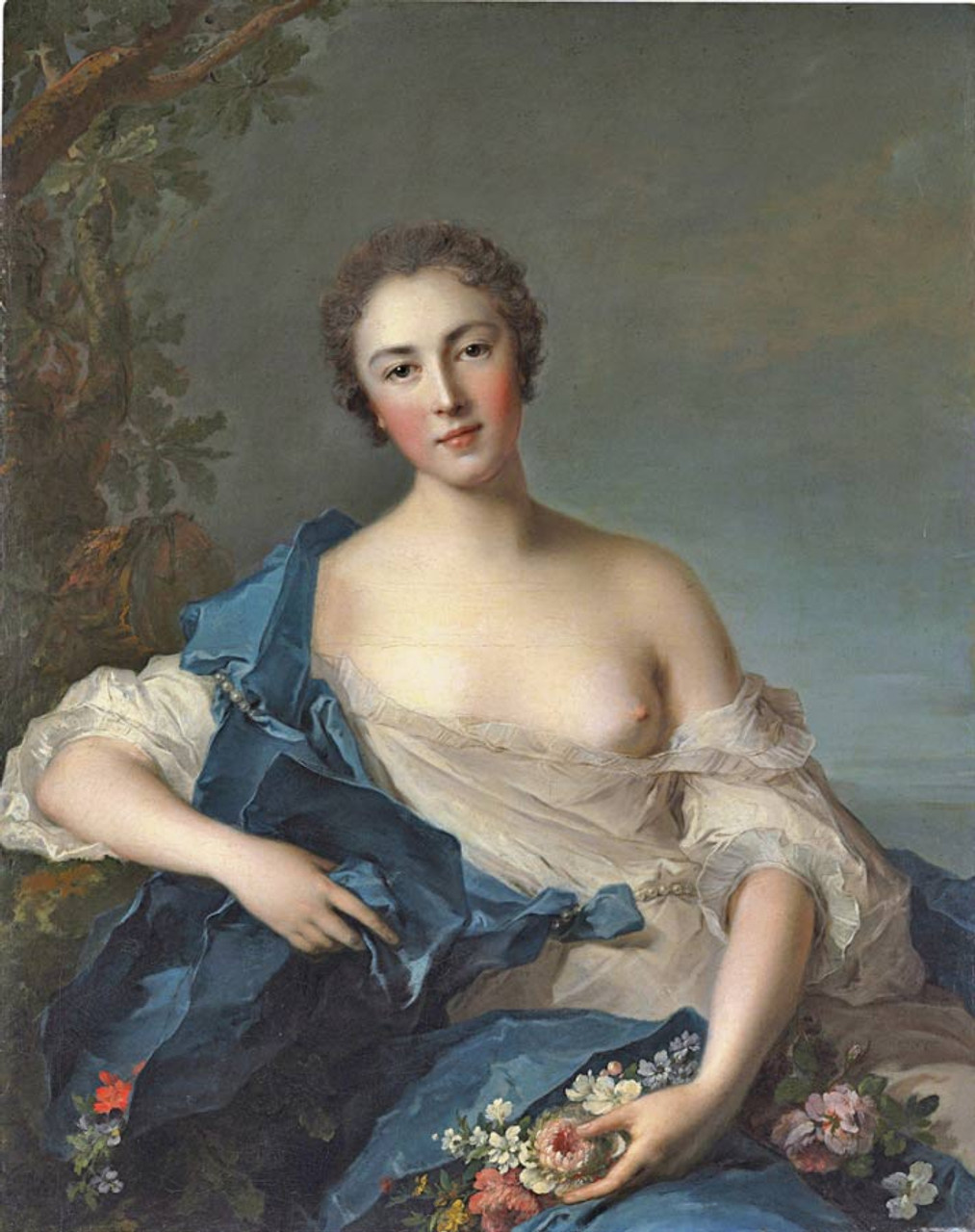
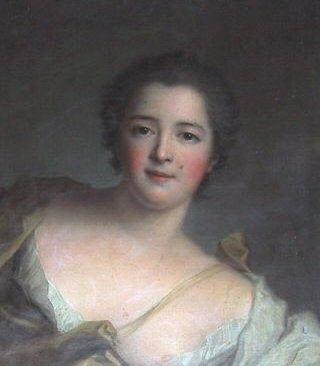
Lady said to be Louise-Julie
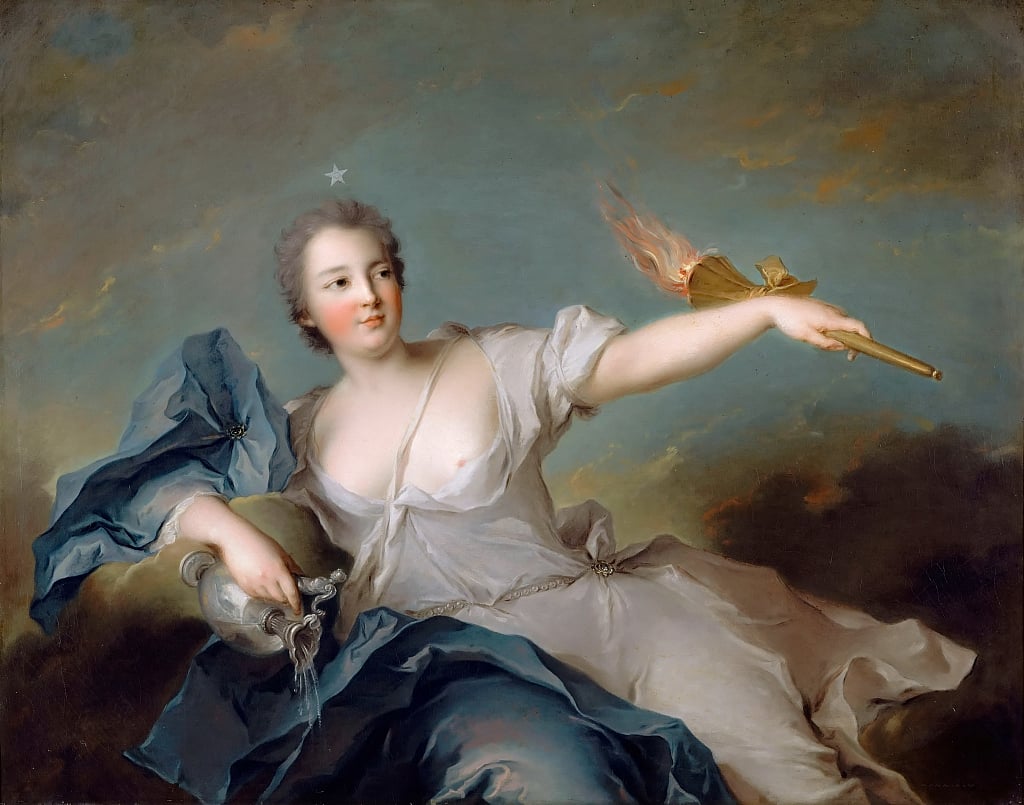
Pauline-Félicité - Jean-Marc Nattier
Louis XV - Maurice-Quentin de la Tour
Marie-Anne - Jean-Marc Nattier
Diane Adelaide - Jean Marc Nattier
Madame de Pompadour - Francois Boucher

Thursday, 30 May 2013

Jesus Christ also known as Alan John Miller


'Take heed that no man deceive you. For many shall come in my name, saying, I am Christ' - Matthew 24: 4-5

There is a man in Australia who says that he's Jesus Christ.

"My name's Alan John Miller and I'm actually Jesus", he boldly asserts.

He says He can remember the events that happened to Him in His first coming 2,000 years ago, including His crucifixion, which He declares "wasn't as harrowing for me as it was for Mary and others who were present".

Jesus has set up a cult which He calls The Jesus Cult, and has created a compound in rural Australia in which He teaches 'Divine Truth' to "assist people to have a personal relationship with God". 

By Jesus's side is His partner Mary Magdalene also known as Mary Suzanne Luck.

Jesus says He also met in the afterlife many illustrious historical figures (though none as illustrious as Himself!) among them Moses and Abraham, Plato, Socrates and Gandhi. 

Jesus also plays the guitar.

Sunday, 12 May 2013

What did William Shakespeare look like?


The face of William Shakespeare has been used for years by publishers, advertisers, comics, fanatics, bloggers, and many others, to illustrate whatever shoddy product they happen to be pedalling. But do we know what the man himself actually looked like? For sure there is no shortage of candidates...


CHANDOS PORTRAIT
Believed to have been painted around 1610 it has the undoubted advantage of being executed during the poet's lifetime. It is normally thought to be the work of the 'water poet' John Taylor, though there is another claim that it is from the brush of Shakespeare's friend and fellow thespian Richard Burbage. [Claim made by George Vertue, English engraver and antiquary 1684-1786] The portrait currently resides in the National Portrait Gallery (London).


COBBE PORTRAIT
Another likeness from Shakespeare's lifetime from circa 1610. It gets its name from the Cobbe family from where it descended. It was in the news in 2009 when Professor Stanley Wells said that "I feel in little doubt that it is a portrait of Shakespeare, done from life and commissioned by the Earl of Southampton..." To which art historian Sir Roy Strong commented "Codswallop!" It now hangs in the Shakespeare Birthplace Trust in Stratford upon Avon.


DROESHOUT ENGRAVING
The portrait used as the frontpiece to the first collection of Shakespeare's plays known as the First Folio, printed in 1623, seven years after the poet's death. The engraver is traditionally identified as Martin Droeshout the younger (1601-1650), though it is more likely that it was his father, Martin Droeshout the elder (c1560-1642). 


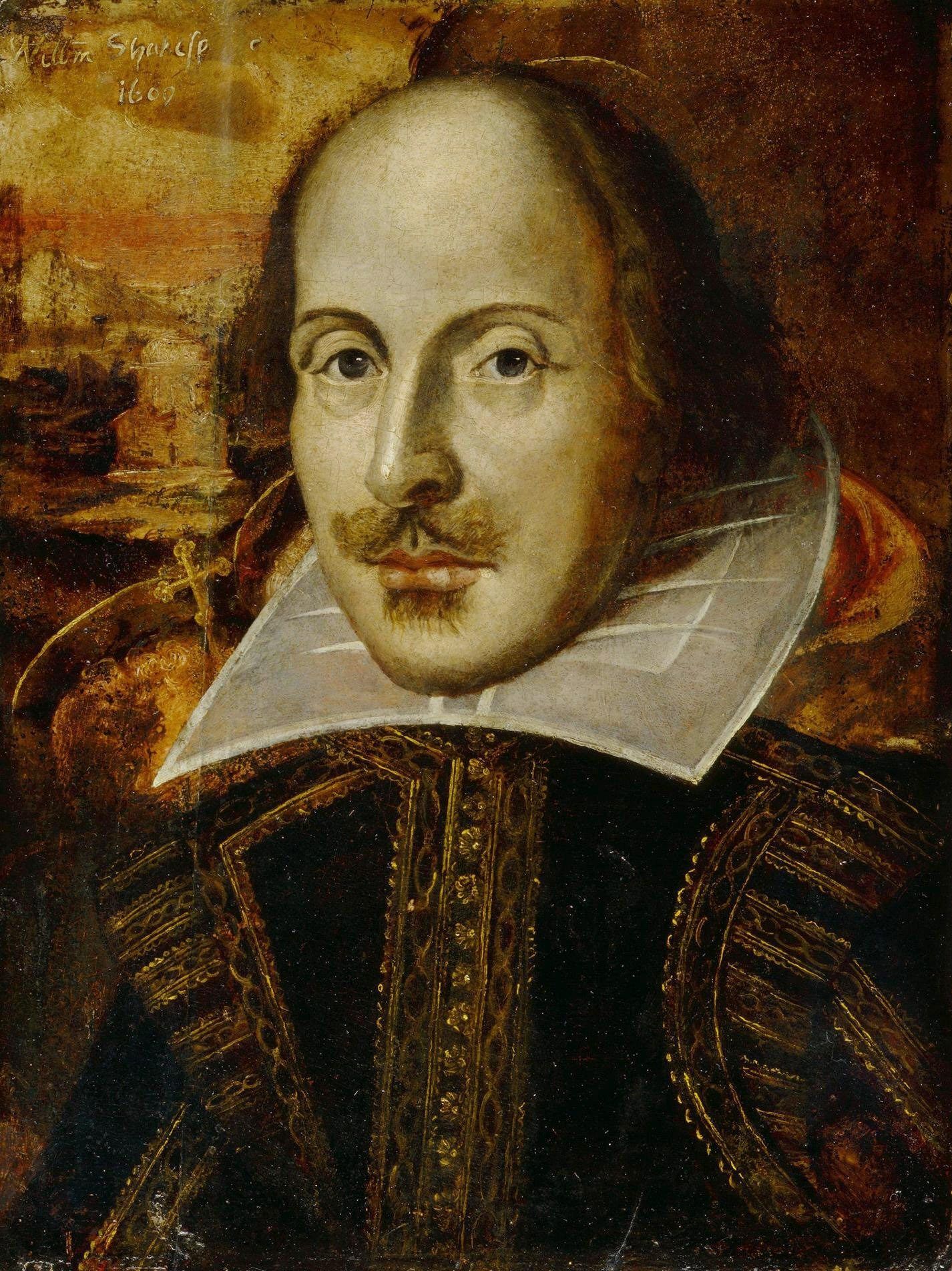
FLOWER PORTRAIT
The painting is dated 1609 and bears the inscription W. Shakespeare, and if it sounds too good to be true it is because it probably is! Following scrupulous examination by the National Portrait Gallery (London) the portrait was in fact made in the early 19th century. It owes its name to its former owner Mrs Charles Flower, and is now in the custody of the Royal Shakespeare Company in Stratford upon Avon.


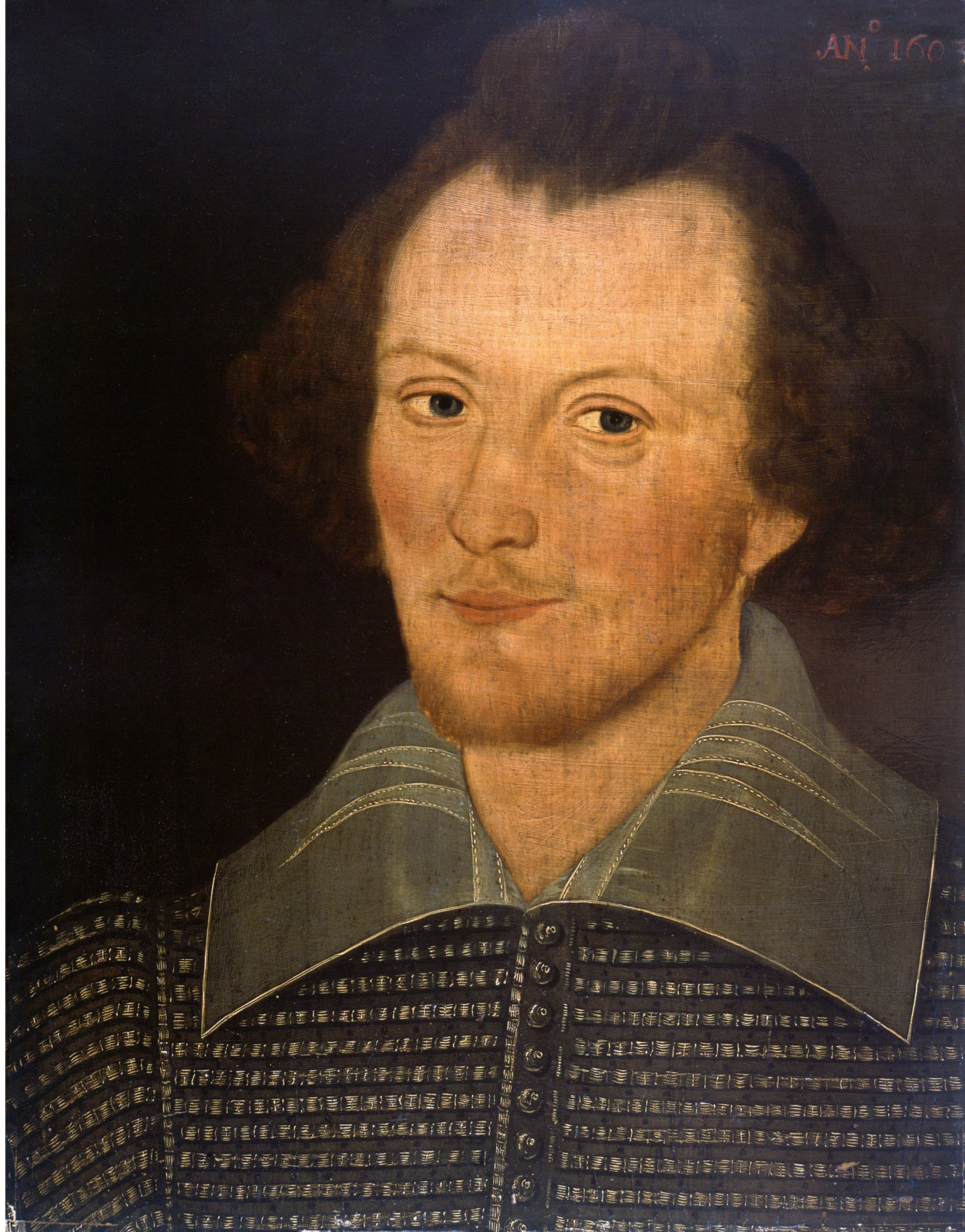
ELY PALACE PORTRAIT
The portrait is dated 1603 and inscribed AE. It came to light in 1845 in the possession of the Bishop of Ely from where it gets its name. The picture's resemblance to the Droeshout Engraving has led to claims that it was used as the model for that work, though it is equally possible that it was a copy inspired by the Droeshout and that it dates from the 19th century. It is now in the possession of the Shakespeare Birthplace Trust in Stratford upon Avon.


ASHBOURNE (KINGSTON) PORTRAIT
A portrait from c1611 and discovered in 1847 and purchased by the Reverend Clement Kingston of Ashbourne. It was initially thought that the sitter could possibly be Shakespeare, but later restoration work revealed the presence of a coat of arms and a latin motto identified as those of Sir Hugh Hammersley. It now resides in the Folger Shakespeare Library (Washington D.C.)


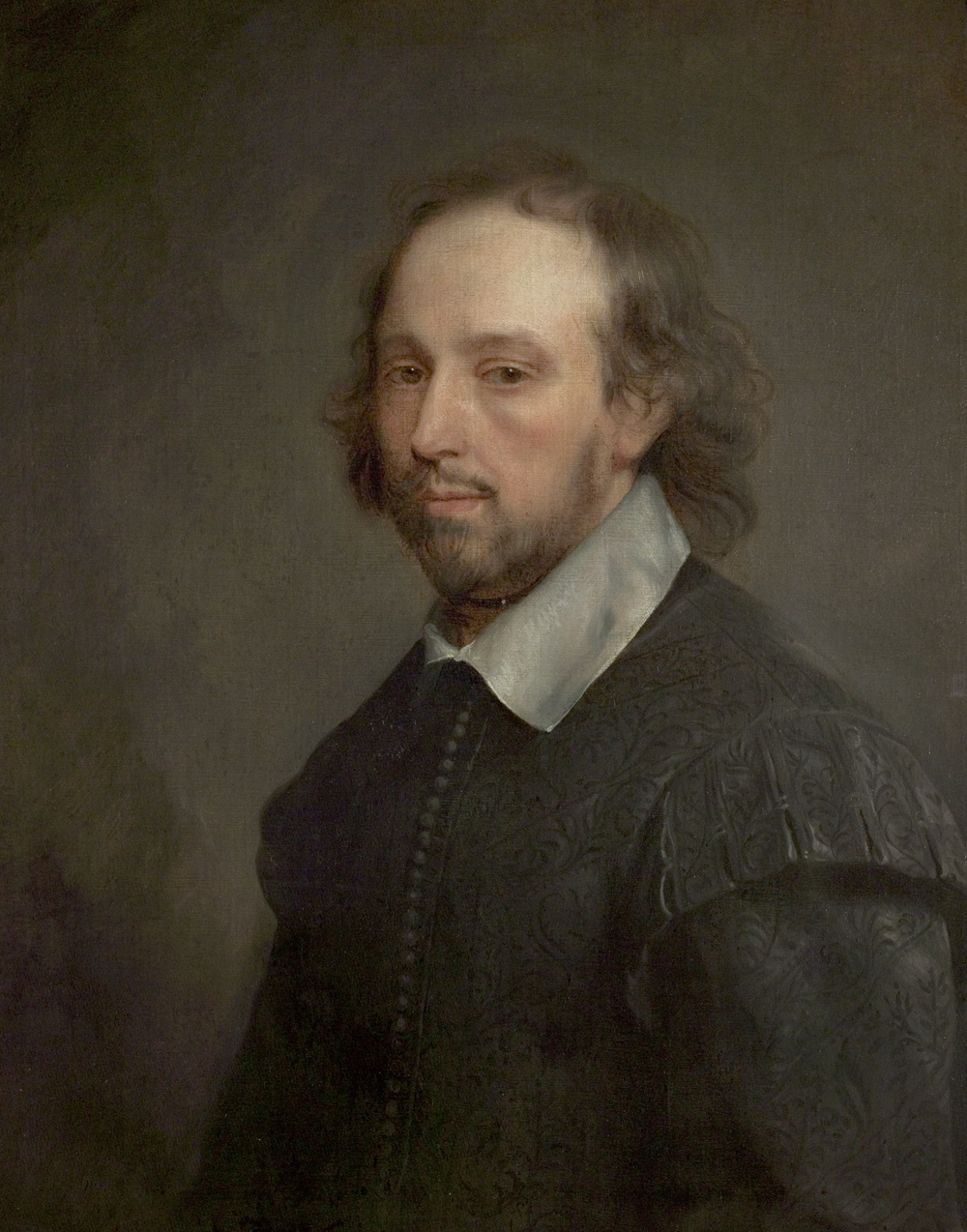
SOEST PORTRAIT
The painting is by the Dutch artist Gerard Soest and is believed to date from after 1656, therefore long after Shakespeare's death in 1616, and may have been inspired by the Chandos Portrait. It had its admirers in the 18th century among the Shakespeare worshipping fraternity, among them Sir Joshua Reynolds, who meticulously painted a loving copy.


JANSSEN PORTRAIT
The portrait was executed c1610 and for a time in the 18th century was considered a real candidate for the elusive Shakespeare but is now believed to be Sir Thomas Overbury, a courtier and author. The identity of the artist is unknown, and the picture is housed at the Folger Shakespeare Library (Washington D.C.). 
See also Janssen Bust.


SANDERS PORTRAIT
Painted by the artist John Sanders around 1603 with only tradition linking it to Shakespeare. 


GRAFTON PORTRAIT
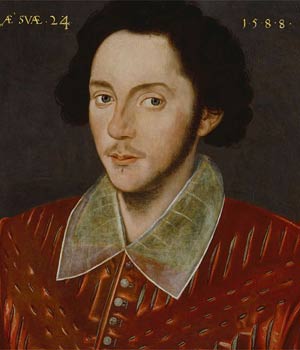
The pictures depicts a young man aged 24 in 1588, which neatly corresponds with Shakespeare's age in that year. But it also corresponds with Christopher Marlowe's age, and doubtless many others. Other than the age coincidence, they is nothing to connect the portrait with Shakespeare.


JANSSEN BUST
The funerary monument at the poet's tomb in Holy Trinity Church, Stratford upon Avon, attributed to Geerhart Janssen (Garret Johnson). It is believed to date from 1620, four years after Shakespeare's death, but is widely accepted as being an accurate likeness. However, the bust is not without controversy, with anti-Stratfordians, who believe that Shakespeare was not the author of the works attributed to him, claiming that the cushion on which he is resting his hands was originally a wool sack, depicting his true profession as a merchant trader.


DEATH MASK
The death mask surfaced in London in 1775 and was purchased by a German nobleman. Two centuries later Hildegard Hammerschmidt-Hummel, a professor of English literature, had the mask subjected to forensic examination. The results of the examination proved, she claims, that it is an authentic death mask of William Shakespeare. Her claim, however, did not meet with the universal agreement of her peers. More...


CHESS PLAYERS
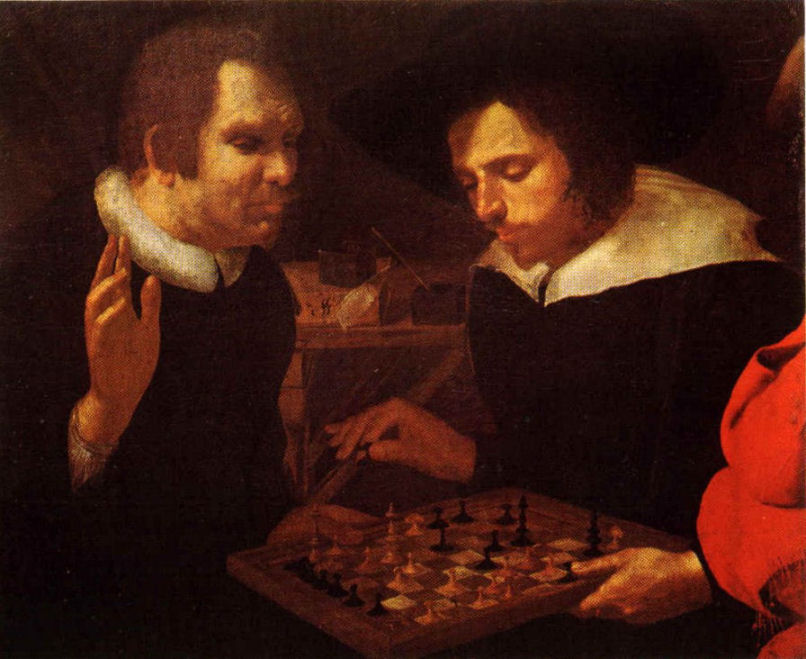
In The Tempest there is the stage direction: 'Here Prospero discovers Ferdinand and Miranda, playing at chess'. It is not inconceivable to image that Shakespeare himself enjoyed testing his wits in this ancient game, but it takes a fanciful mind to imagine that the picture here depicts him locked in battle with his friend and rival Ben Jonson, which some believe. The painting dates from 1600 and is attributed to Karel van Mander.


Friday, 3 May 2013

Joseph Pujol (Le Pétomane) - a man of music and no ordinary fart


Name: Joseph Pujol
Born: 1st June 1857
Profession: Flatulist or Professional Farter
Stage name: Le Pétomane

Joseph Pujol was a man born with an extraordinary gift. "I have a vacuum cleaner anus", he once explained. "My anus has such elasticity that I open it and close it at will".

In the army he demonstrated his 'vacuum cleaner anus' by using it to suck water up a tube from a bowl.


Upon leaving the army, he decided that his fortune clearly lay in his backside, and in 1887 he took to the Marseille stage where he regaled his audiences with his farting impressions of musical instruments.

Soon wind was breaking of a unique and rare talent. He moved to Paris, and in 1892 performed at the famous Moulin Rouge.


Audiences were intoxicated! One lady, bowelled over by the furious flow of forensic fumes from his flatulent fundament, needed medical attention. Soon the theatre management had to have a nurse on permanent stand-by.

His farting repertoire included renditions of La Marseillaise and O Sole Mio. And among his growing army of anal admirers were the Prince of Wales, King Leopold of Belgium, and Sigmund Freud. 


Le Pétomane continued farting until the outbreak of war in 1914 and after the war he retired. 

After his death in 1945 a Paris medical school offered 25,000 francs for his famous anus. But his eldest son Louis refused, saying: "There are some things in life which should simply be treated with reverence".